


How to Choose the Best Floor Polishing Pads?
Choosing the right Floor Polishing Pads is not a simple matter of picking the brightest color. The pad must match the floor material, finish condition, machine speed, and cleaning objective. A soft white pad may polish a coated surface gently. A more aggressive diamond pad may refine concrete, but it can damage vulnerable flooring when used carelessly.
Industry research shows why this decision matters. Grand View Research’s 2024 analysis of the floor cleaning machines market identifies efficiency, mechanization, and improved maintenance results as major purchasing drivers. Fortune Business Insights’ floor cleaning machines market report also tracks continued demand from commercial and industrial facilities. These reports do not select a pad for you. They show a wider trend: facility teams want faster results without shortening floor life.
Practical judgment remains essential. Check the manufacturer’s instructions. Inspect a small hidden area first. Look at the floor under angled light, where swirl marks become obvious. Then match the pad’s abrasiveness, diameter, operating speed, and wet or dry application. A low-speed scrubber and a high-speed burnisher require different products. That shortcut sounds efficient. It is not.
ISSA’s Value of Clean research links visible cleaning quality with occupant confidence and facility performance. This makes pad selection more than a cosmetic choice. It affects safety, labor hours, appearance, and maintenance costs. Still, product labels can be confusing, and color systems are not universal. This guide compares common pad types, explains their practical uses, and highlights mistakes that experienced operators still make. The goal is not a perfect rulebook. Floors vary. Testing matters.
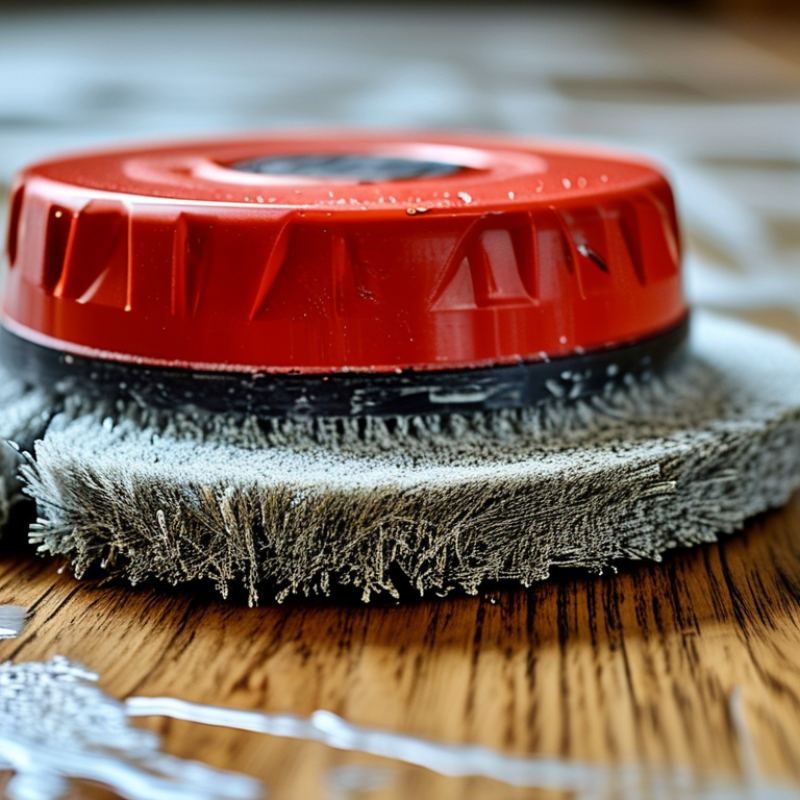
Understanding Floor Polishing Pad Types and Their Main Applications
How to Choose the Best Floor Polishing Pads?
Choosing a floor polishing pad starts with the floor, not the machine. Soft white pads suit light cleaning and spray buffing on protected surfaces. Red pads handle routine cleaning and mild surface marks. Green pads provide stronger scrubbing, but they can dull delicate finishes. Black pads are highly abrasive and usually support deep stripping. Use them carefully on resilient floors. Diamond-impregnated pads are different. They refine concrete, terrazzo, and stone through progressive grit levels, such as 50, 100, 200, and 400.
Application conditions matter as much as pad type. In hotels, a red or white pad may protect the finish during frequent maintenance. Retail floors often need a balance between cleaning speed and gloss retention. Concrete warehouses require diamond pads, controlled water, and dust management. A practical test area remains essential. Check the floor after two or three passes. Watch for swirl marks, heat, or uneven shine.
Grand View Research estimated the global floor cleaning machines market at about USD 5.1 billion in 2023, with continued growth expected through 2030. Allied Market Research also projects steady expansion in floor-cleaning equipment demand. These reports cover machines, not pad sales, but they indicate rising maintenance activity. Pad selection still receives less attention than machine power. That is a mistake. A stronger machine cannot correct the wrong abrasive level. I sometimes choose a slower pad first, because aggressive removal can create repair costs. The perfect chart does not exist. Floor testing does.
How to Choose the Best Floor Polishing Pads? - Understanding Floor Polishing Pad Types and Their Main Applications
| Floor Polishing Pad Type | Typical Grit or Abrasive Level | Construction and Function | Best Applications | Compatible Floor Surfaces | Wet or Dry Use | Key Selection Considerations |
|---|---|---|---|---|---|---|
| Black Stripping Pad | Very aggressive; commonly used without a grit designation | Coarse, open synthetic fibers designed to remove heavy floor finish and built-up coatings. | Complete finish removal and intensive floor preparation. | Resilient floors such as vinyl composition tile, sheet vinyl, and linoleum, when approved by the flooring manufacturer. | Usually wet | Use with stripping solution and low-speed equipment. Avoid on delicate, polished, or unsealed surfaces. |
| Green Scrubbing Pad | Medium to aggressive | Durable abrasive fibers remove embedded soil, scuff marks, and worn surface finish without full stripping. | Deep scrubbing and periodic maintenance. | Resilient floors and selected sealed hard floors. | Wet | Suitable for rotary machines and automatic scrubbers. Test first because aggressive pads may dull soft finishes. |
| Blue Cleaner Pad | Light to medium abrasive | Less aggressive fibers loosen surface dirt and light scuffing during routine cleaning. | Daily or scheduled spray cleaning on moderately soiled floors. | Vinyl, linoleum, sealed concrete, and other finish-coated floors. | Wet or damp | Offers more cleaning power than a polishing pad while reducing the risk of excessive finish removal. |
| Red Spray-Buff Pad | Light abrasive | Fine synthetic fibers clean lightly soiled areas and smooth minor scuffs while producing a satin appearance. | Spray buffing and frequent restoration of floor appearance. | Finish-coated vinyl, linoleum, rubber, and similar resilient flooring. | Dry or lightly damp | Best for low-speed or appropriate high-speed machines, depending on the pad specification and floor finish. |
| White Polishing Pad | Non-abrasive or ultra-fine abrasive | Soft fibers polish and burnish clean, finish-coated floors with minimal surface cutting. | Final polishing and maintaining a high-gloss appearance. | Sealed resilient floors, coated concrete, and other smooth finished surfaces. | Dry | Requires a clean floor and compatible finish. It will not remove deep scratches, heavy soil, or thick coatings. |
| Diamond-Impregnated Maintenance Pad | Approximately 220–1,500 grit, depending on the task | Synthetic fibers containing fine diamond abrasives refine and polish hard mineral surfaces. | Daily cleaning, light honing, and restoration of polished stone or concrete. | Polished concrete, terrazzo, marble, granite, and other dense stone surfaces. | Wet or dry, according to the pad design | Choose the grit according to the required correction level. Avoid using coarse grades on finished surfaces without a proper test area. |
| Resin Diamond Polishing Pad | Commonly 50–3,000 grit | Resin-bonded diamond abrasives progressively refine scratches and increase surface clarity and gloss. | Honing, scratch removal, and multi-step polishing of mineral floors. | Concrete, terrazzo, marble, granite, and engineered stone where the surface is suitable for mechanical polishing. | Usually wet; some designs are dry-rated | Use a progressive grit sequence. Skipping too many grit steps can leave visible scratches and increase labor time. |
| Metal-Bond Diamond Pad | Approximately 16–120 grit | Hard metal-bond diamonds aggressively grind and level the surface before resin polishing. | Initial grinding, coating removal, lippage correction, and heavy scratch reduction. | Concrete and selected hard stone surfaces. | Wet or dry, depending on equipment and dust-control requirements | Highly aggressive. Use suitable dust extraction for dry work and avoid thin, soft, or easily damaged surfaces. |
| Microfiber Cleaning Pad | Non-abrasive | Fine microfiber strands trap dust and surface soil without intentionally cutting the floor. | Dust removal, light daily cleaning, and polishing preparation. | Finished resilient floors, smooth tile, sealed concrete, and other manufacturer-approved surfaces. | Dry or damp | Good for routine maintenance but not suitable for removing scratches, coatings, or embedded construction residue. |
| Melamine Foam Pad | Fine micro-abrasive | Open-cell foam removes marks through micro-abrasion rather than traditional fiber scrubbing. | Spot cleaning of stubborn scuffs and marks. | Selected hard, smooth, non-gloss-critical surfaces after testing. | Damp | May reduce gloss or alter delicate coatings. Always test in an inconspicuous area before broad use. |
| Natural-Fiber Polishing Pad | Fine to medium polishing action | Natural fibers generate friction and heat to enhance gloss on suitable finish-coated floors. | High-speed burnishing and gloss enhancement. | Hard, well-cured floor finishes and selected polished surfaces. | Dry | Use only at the machine speed recommended for the pad. Excessive heat or pressure can damage finishes. |
| Carpet Bonnet Pad | Low to medium cleaning action | Absorbent or blended fibers transfer cleaning solution and soil from low-profile carpet. | Low-moisture carpet cleaning and surface agitation. | Commercial low-pile and short-loop carpet, subject to carpet-care instructions. | Damp or low moisture | Not intended for hard-floor polishing. Select fiber type according to carpet construction and soil level. |
Related Posts
-
How to Choose Concrete Polishing Resin Pads in 2026?
-
What are Diamond Polishing Pads and How Do They Work?
-
2026 Best Diamond Polishing Pads for Optimal Surface Finishing?
-
Essential Tips for Choosing the Best Diamond Polishing Pads?
-
China Top Grinding Disc Types and Their Applications?
-
Why Choose Diamond Pads for Superior Surface Finishing?


