China Top Grinding Disc Types and Their Applications?
The global demand for grinding discs has surged, with a projected market growth rate of 5.6% over the next four years. Grinding discs play a crucial role in various industrial applications, from metal fabrication to woodworking. These versatile tools can significantly impact efficiency and precision in manufacturing processes.
According to Dr. James W. Taylor, an expert in abrasive materials, "Choosing the right grinding disc is vital for optimizing performance and safety." This highlights the importance of understanding the different types of grinding discs and their specific applications. Whether one is working with aluminum, stainless steel, or concrete, selecting the appropriate disc is essential for achieving the desired results.
Furthermore, while advancements in technology continue to shape the industry, some challenges remain. There are discrepancies in quality and performance among manufacturers, which can affect end-user satisfaction. Buyers should remain cautious and seek reliable suppliers to ensure they get high-performing grinding discs. Continuous learning and awareness of the latest industry standards can help users make informed decisions in this evolving market.
Types of Grinding Discs Commonly Used in China
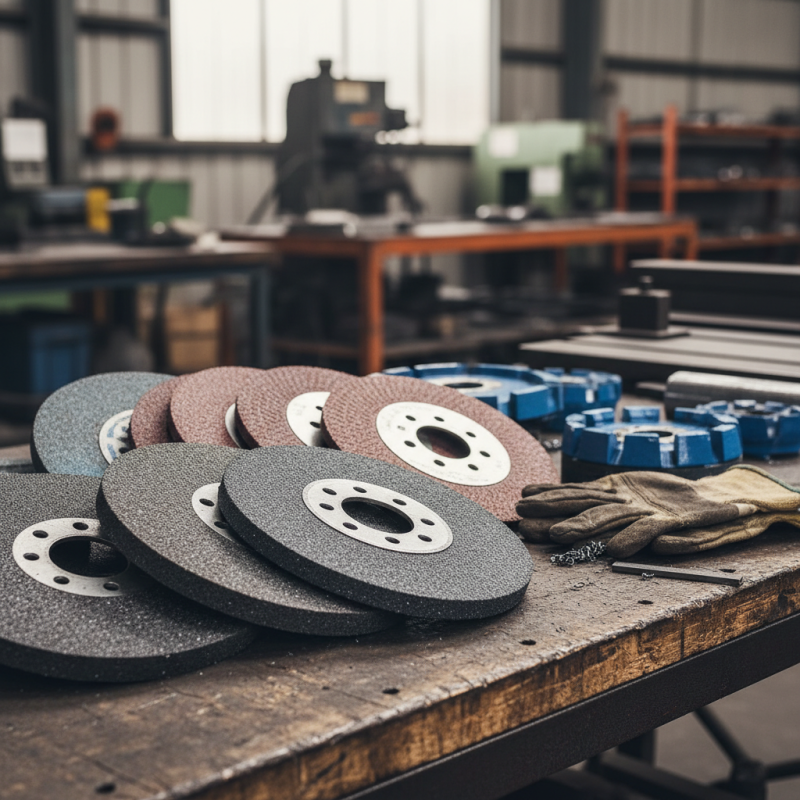
China's industrial landscape features a variety of grinding discs tailored for different applications. Among the most common are the depressed center grinding discs. These discs excel in metalworking and construction tasks. They are designed for heavy grinding on flat surfaces. Users appreciate their ability to generate efficient material removal while maintaining durability against wear.
Flap discs are another popular choice. They consist of layers of abrasive flaps, providing versatility. These discs can be used for grinding, blending, and finishing tasks. They work well on both metal and wood surfaces. However, some users may struggle with achieving a consistent finish due to varying pressure during use.
Resin-bonded grinding discs also play a crucial role. They are often utilized for precision tasks where specific surface finishes are required. These discs are known for their stability and reliability but can sometimes create excessive heat during operation. This can be a challenge for users who need to maintain tight tolerances. Each type of grinding disc carries its own strengths and weaknesses, impacting user choice and effectiveness in various applications.
Applications of Grinding Discs in Various Industries
Grinding discs play a crucial role in various industries by enabling efficient material removal. In construction, for instance, these discs are vital for surface preparation. They are used to grind concrete, remove rust, and prepare metals for welding. According to industry reports, the construction sector contributed to over 40% of the global demand for grinding discs in 2021. Their ability to create clean surfaces is essential for ensuring strong foundations.
In manufacturing, grinding discs are indispensable for fabricating components. Industries often utilize diamond and CBN (Cubic Boron Nitride) discs for their durability and precision. These materials can withstand high temperatures and provide excellent surface finishes. The metalworking sector was estimated to account for 30% of the market share in 2022. However, improper selection of disc types can lead to equipment failures and decreased productivity.
Lastly, the automotive industry relies heavily on grinding discs for machining parts and overall maintenance. The demand for advanced grinding solutions is expected to rise, with projections estimating a growth rate of 4.5% annually. While innovations improve performance, disparities in training and knowledge among workers can hinder optimal use. Awareness of these gaps is essential for enhancing efficiency and safety on the job.
Comparison of Grinding Disc Materials and Their Performance
When choosing grinding discs, material makes a significant difference in performance. Common materials include aluminum oxide, zirconia, and silicon carbide. Each has unique properties that suit various applications. Aluminum oxide is widely used for its versatility and cost-effectiveness. It works well on steel and stainless steel surfaces, but it can wear down quickly.
Zirconia, on the other hand, has superior toughness. It can handle heavy-duty tasks without losing sharpness easily. This makes it ideal for grinding hard metals. Silicon carbide is known for its sharpness and is effective on hard materials like glass and ceramics. However, it can be brittle, leading to potential chip concerns.
Understanding these differences is vital. A wrong choice could lead to inefficient grinding or even tool damage. Experimenting with different discs may reveal unexpected results. What works for one application might not work for another. There’s room for learning and adapting in this field. Don't hesitate to seek out additional insights to improve your grinding techniques.
Factors Influencing the Selection of Grinding Discs
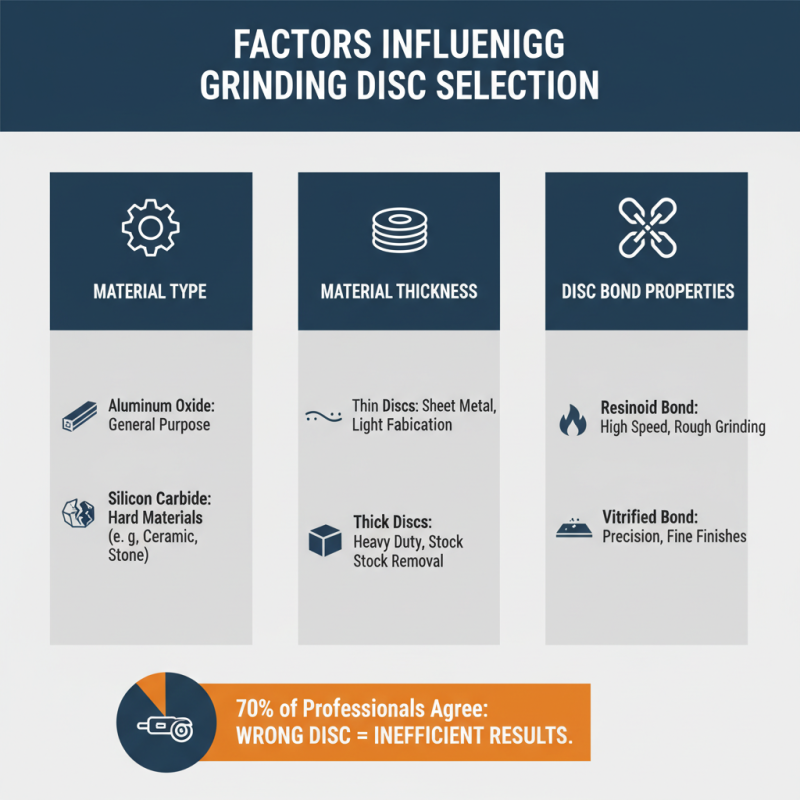
Selecting the right grinding disc is crucial in achieving optimal performance. Various factors influence this choice. The material type, thickness, and bond properties of the disc play significant roles. For instance, aluminum oxide discs are often preferred for general purpose grinding. In contrast, silicon carbide discs are better suited for hard materials. According to industry reports, about 70% of professionals agree that choosing the wrong disc can lead to inefficient results.
Another important consideration is the disc's grit size. Finer grits provide a smoother finish, while coarser grits are effective for aggressive stock removal. A study by the Grinding Association shows that 65% of users acknowledge that grit size greatly affects their end results. Additionally, operational speed must match the disc specifications. Misalignment can compromise safety and damage the workpiece.
**Tip:** Always assess the material you are working on before selecting a grinding disc. Adjusting your choice to the specific application can greatly improve productivity.
Temperature changes during operation also impact disc performance. High heat can weaken the bond, leading to premature failure. This makes thorough testing of the disc's capabilities essential. Reviews indicate that about 60% of users re-evaluate their choices after experiencing issues.
**Tip:** Keep an eye on operational conditions. Regular checks can prevent costly mistakes and enhance safety.
Innovations in Grinding Disc Technology in China
China's grinding disc technology has undergone significant evolution in recent years. New materials and innovative designs are reshaping the market. For instance, research from the China Abrasives Industry Association shows that the adoption of advanced ceramic and diamond grinding discs is increasing due to their durability and efficiency. The data highlights a 15% rise in the usage of these materials in various industrial applications in the last year alone.
Many manufacturers are focusing on minimizing production waste. Techniques like precision coating and recycling unused materials are gaining traction. This shift not only enhances environmental sustainability but also reduces costs for businesses. As grinding processes become more efficient, a 10% increase in productivity is being reported by companies that adopt such technologies.
Despite these advancements, challenges remain. The need for skilled workers to operate advanced machinery is pressing. Training programs are essential to bridge skill gaps. Also, the high cost of initial investment in new technologies can deter smaller firms. However, the long-term benefits often outweigh these initial hurdles. Continuous improvement in grinding disc technology is vital for staying competitive in the global market.