China Top Diamond Polishing Pads Manufacturers?
China Top Diamond Polishing Pads Manufacturers? This question matters to stone processors, glass fabricators, electronics suppliers, and precision manufacturers. Diamond Polishing Pads combine abrasive performance with controlled finishing, so supplier quality affects more than surface appearance. It influences cycle time, edge integrity, consistency, and tool replacement costs.
Recent industry research supports China’s growing importance in this field. Grand View Research’s reports on the global diamond tools market identify Asia-Pacific as the leading regional market, supported by construction, infrastructure, and manufacturing demand. MarketsandMarkets also links advanced abrasive-tool growth with electronics, automotive, aerospace, and engineered materials. These reports use different definitions, however. Their figures should guide research, not replace factory-level verification.
In practice, a reliable manufacturer should show more than attractive product photos. Buyers should examine diamond concentration, bond formulation, grit grading, pad thickness, backing design, and recommended operating speeds. A polished granite edge should remain uniform after repeated passes. A ceramic or glass application may require tighter control and different cooling conditions. This is where technical experience becomes visible.
Not every leading supplier is the right supplier.
Manufacturers may specialize in resin, metal, ceramic, or hybrid systems. Some provide OEM development, batch testing, and application trials. Others compete mainly on price, which can create inconsistent results. Independent testing, sample evaluation, production records, and clear after-sales communication remain essential. This guide will compare China’s notable Diamond Polishing Pads manufacturers through product capability, quality control, customization, certifications, and practical suitability. The comparison may not be perfect, because supplier data is not always equally transparent. That limitation deserves attention.
What Are Diamond Polishing Pads and How Are They Used?
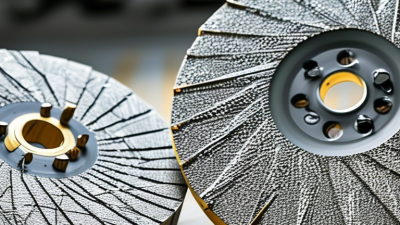
Diamond polishing pads are flexible discs containing industrial diamond particles. They remove scratches and refine surfaces through controlled abrasion. The pad’s bond may be resin, metal, or hybrid material. Each type suits different stages and materials.
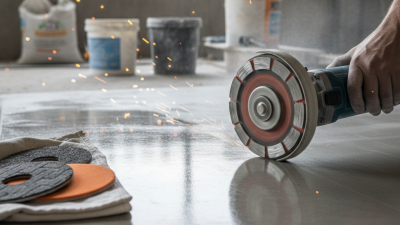
In practical workshops, operators use these pads on concrete, granite, marble, terrazzo, and engineered stone. Coarse grits remove saw marks or uneven areas. Finer grits create a smoother, brighter finish. The pad attaches to a floor grinder, angle grinder, or polishing machine. Keep the surface clean. Use water carefully.
Wet polishing controls heat and reduces airborne dust. Dry polishing is faster, but it requires effective dust extraction and suitable ventilation. Pressure should remain moderate. Excess force can leave swirl marks, overheat the pad, or damage a soft stone. A steady machine speed usually produces more even results. Skilled users inspect the surface between grit changes. Skipping a grit often saves minutes but creates longer correction work later. That assumption can be costly.
When evaluating Chinese diamond pad manufacturers, buyers should examine grit consistency, bond strength, backing quality, and test data. Reliable suppliers explain recommended speeds, compatible materials, and wet or dry applications. Sample testing remains important because stone density and machine settings vary. Even a well-made pad may perform poorly under unsuitable pressure or on a poorly prepared surface. Mistakes still happen. Careful records improve the next job.
Key Types of Diamond Polishing Pads Made in China
China Top Diamond Polishing Pads Manufacturers?
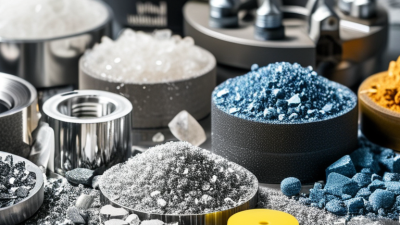
Chinese manufacturers produce several diamond polishing pad types for granite, marble, concrete, glass, and engineered stone. Resin-bond pads are common for fine finishing. They remove fewer scratches and create a brighter surface. Metal-bond pads use harder segments for aggressive grinding. They suit uneven concrete and heavily scratched stone.
Hybrid pads combine metal and resin characteristics. They can reduce the sharp transition between grinding and polishing. Electroplated pads expose diamond particles directly on a flexible backing. These pads cut quickly, but their working life may be shorter. Vitrified-bond options remain less common, yet they offer stable heat control in demanding applications.
According to Grand View Research’s 2023 diamond tools report, construction remained a major demand sector, supported by infrastructure and renovation work. The report also identifies Asia-Pacific as a leading regional market. A separate Mordor Intelligence analysis expects continued growth in diamond tooling through this decade, although exact pad figures vary by product definition. That matters when comparing Chinese suppliers.
No single pad wins every slab. A 50-grit metal pad may level concrete quickly, while a 1,500-grit resin pad needs clean water and steady pressure. Technical testing should check diamond concentration, segment height, bond hardness, runout, and heat resistance. Catalog grit numbers can mislead. I have seen similar labels produce different scratch patterns. Sample testing on the actual stone remains wiser than relying on price or photographs.
How to Evaluate China’s Top Diamond Polishing Pad Manufacturers
How to Evaluate China’s Top Diamond Polishing Pad Manufacturers
Choosing among China’s diamond polishing pad manufacturers requires more than comparing prices. Start with the abrasive system, bond type, segment design, and grit range. These details affect cutting speed, heat control, edge quality, and final gloss. Ask for technical data sheets and test samples for your exact stone or concrete surface. A pad that performs well on granite may struggle on engineered stone.
Inspect the manufacturer’s production controls. Confirm diamond distribution, segment height, backing strength, and batch traceability. Request inspection records for thickness, flatness, and bond consistency. If possible, visit the factory or arrange a live video audit. Experienced suppliers should explain their testing equipment clearly, not hide behind general claims. Check whether they can adjust tooling, packaging, and grit sequences for your machines. Response time matters too.
Tips: Test at least three samples under identical pressure, speed, water flow, and working time. Record gloss, scratches, wear, and labor hours. A polished sample can mislead. Production results may vary. Ask the manufacturer to explain any difference and repeat the test. Also review communication quality, replacement policies, export documents, and technical support before placing a large order. The cheapest pad may create higher costs through uneven finishing, frequent changes, or rejected slabs.
Manufacturing Standards, Quality Control, and Product Performance
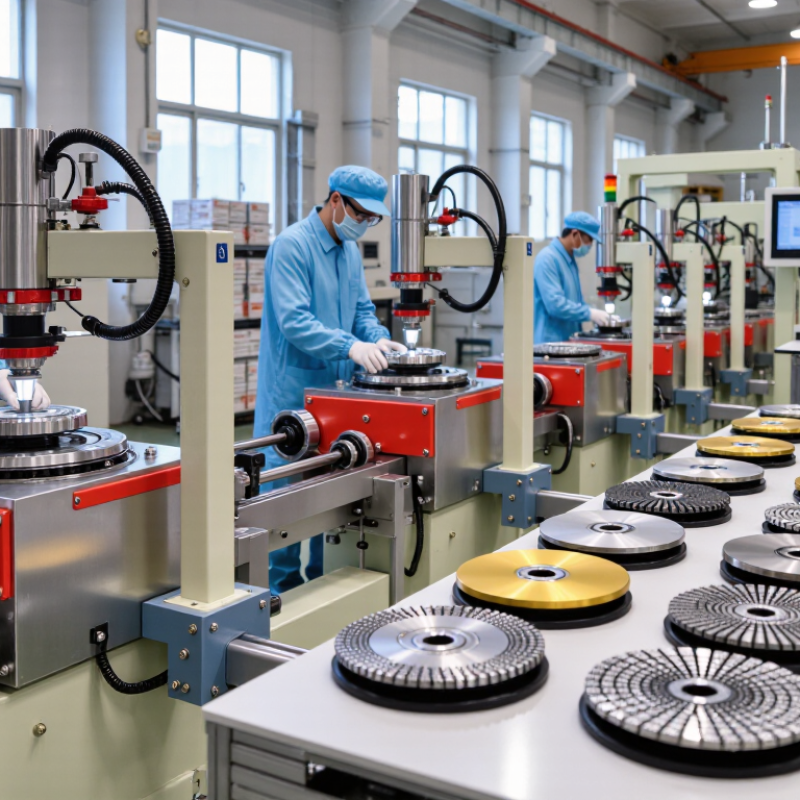
China’s leading diamond polishing pad manufacturers are usually distinguished by disciplined production standards, not attractive catalogs alone. A reliable factory defines grit size, bond hardness, pad thickness, and backing dimensions before production begins. These specifications should match the target material, such as granite, concrete, engineered stone, or ceramic.
Quality control starts with incoming inspection. Diamond concentration, particle distribution, resin ingredients, and backing flatness require documented checks. During molding, operators monitor pressure, temperature, and curing time. Small deviations can create uneven cutting or visible swirl marks. Each batch should carry a traceable code. That detail matters when a contractor reports inconsistent results months later. ISO-based procedures can support consistency, but certification alone does not prove strong pad performance.
Practical testing should measure cutting speed, surface finish, heat generation, and usable life. A controlled test on a specified stone sample gives more useful evidence than a general claim of “high efficiency.” Inspectors can also check pad balance and hook-and-loop adhesion before shipment. The evaluation is not always perfect. Field conditions vary, and water flow or machine pressure can change the result. Some manufacturers may improve one feature while weakening another, such as extending life but reducing initial aggressiveness. Honest technical data should show both strengths and limitations, supported by sample testing and customer feedback.
The chart shows the publication year of internationally recognized management standards relevant to diamond polishing pad manufacturing. ISO 9001 supports quality management, ISO 14001 addresses environmental management, ISO 45001 covers occupational health and safety, and ISO 50001 focuses on energy management. Certification to these standards does not by itself guarantee polishing performance; product quality should also be verified through application-specific testing such as removal rate, surface finish, pad wear, and consistency.
Source: International Organization for Standardization (ISO), published standard editions.
How to Choose the Right Chinese Manufacturer for Your Application
Choosing the right Chinese diamond polishing pad manufacturer requires more than comparing prices. Define your application clearly: concrete, terrazzo, engineered stone, or another surface. Record the machine model, working speed, pad diameter, grit sequence, and required finish. A capable supplier should discuss these details before recommending a product.
Request technical data, sample pads, and test instructions. Check diamond concentration, bond type, segment shape, backing quality, and expected working life. Ask how each batch is inspected and traced. Photos are useful, but production records are stronger evidence. A factory audit, video inspection, or independent quality check can reveal weak packaging, uneven segments, or poor storage practices. Small defects become expensive on a large project.
Test samples under your actual pressure, water flow, and operating speed. Compare cutting efficiency, heat, vibration, dust control, and surface consistency. Do not judge one pad after five minutes. Results may change across different concrete hardness levels. Confirm tolerances, packaging, delivery terms, replacement policies, and technical support in writing. Clear communication matters when specifications change. I have seen promising samples fail during continuous production, so a small trial order is wise. Even experienced buyers can overlook machine compatibility. Leave room for adjustment, and ask the manufacturer to explain what the test results really mean.