


How to Choose the Best Diamond Hand Polishing Pad?
Choosing the best Diamond Hand Polishing Pad is less about buying the hardest pad. It is about matching the pad to the stone, finish, and working conditions. A granite countertop, marble vanity, and concrete edge can require very different abrasive behavior. The wrong pad may leave uneven gloss, visible swirl marks, or excessive heat near delicate edges.
Stone-care authority Fred M. Hueston advises, “The right product is only as good as the person using it.” That principle matters here. A skilled operator checks the surface before polishing. They notice scratches, resin marks, open pores, and areas that feel warmer under the hand. Experience often beats a promising product label.
Start by identifying the material and target finish. Confirm the pad’s grit range, backing quality, water requirement, and intended application. Resin pads usually create smoother transitions, while metal-bond options may remove deeper marks more aggressively. Hand comfort also matters. A thin pad can improve control, but it may become uncomfortable during long edge work.
Test a small, hidden area first. Always test first. Watch the slurry, pressure, and surface temperature. Excessive pressure can shorten pad life and create inconsistent results. I would not assume a higher grit always produces a better finish. Sometimes the earlier step was incomplete, and the final shine exposes that mistake.
A reliable Diamond Hand Polishing Pad should cut predictably, hold its shape, and deliver a consistent finish across practical working conditions. Compare real performance, not just specifications. Small flaws in technique remain possible, even with premium tools. That is why careful testing, honest evaluation, and repeatable process control should guide every purchase.
Understanding Diamond Hand Polishing Pad Types and Applications
How to Choose the Best Diamond Hand Polishing Pad?
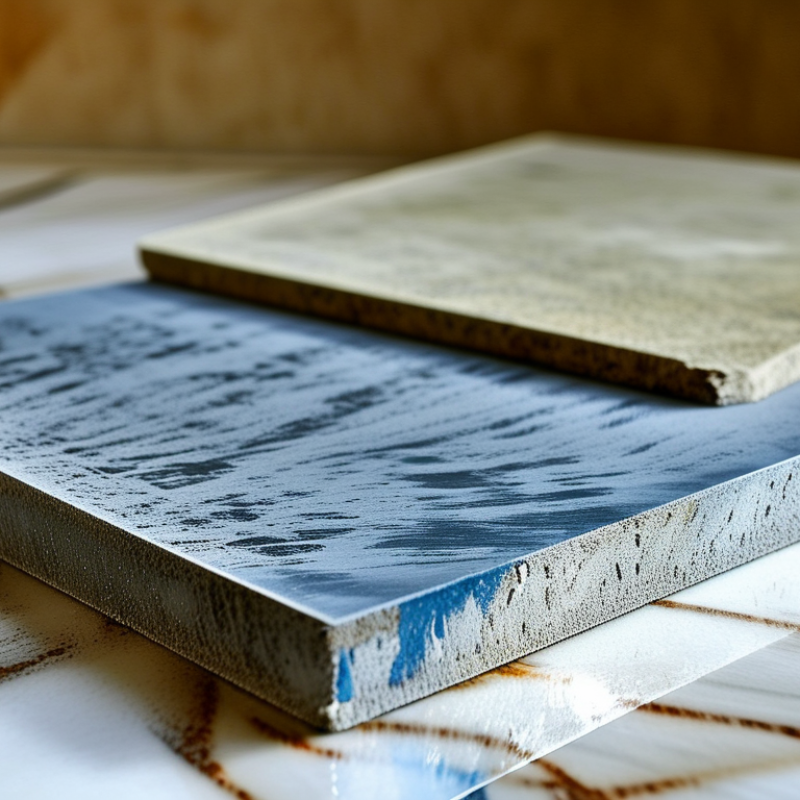
Diamond hand polishing pads differ in construction, flexibility, cutting speed, and surface finish. Understanding these differences helps match the pad to each material and task. Electroplated pads expose diamond particles directly on the surface. They cut quickly and work well on stone edges, glass, ceramics, and small repairs. Resin-bond pads feel smoother and provide better control during finishing work. Diamond abrasive sheets are useful for flat surfaces and detailed hand shaping.
Grit size also changes the application. Coarse grits remove saw marks, uneven edges, and minor chips. Medium grits refine the scratches. Fine grits create a cleaner, brighter finish. A common workshop mistake is jumping from coarse grit to very fine grit. Deeper scratches may remain visible. I would inspect the surface under strong side lighting before changing grits.
Use water when the pad and material allow wet polishing. Water reduces dust, lowers heat, and helps carry away loose particles. Dry polishing may suit quick edge work, but heat can damage delicate surfaces. Keep the pad flat and use light, even pressure. Let the diamond do the cutting. The first pass may look uneven, and that is normal. Stop occasionally, clean the surface, and reassess the scratch pattern. Wear suitable eye protection and respiratory protection when dry dust is possible.
How to Choose the Best Diamond Hand Polishing Pad? - Understanding Diamond Hand Polishing Pad Types and Applications
| Pad Type | Typical Grit Range | Construction | Best-Suited Materials | Recommended Applications | Advantages | Limitations | Wet/Dry Guidance |
|---|---|---|---|---|---|---|---|
| Electroplated Diamond Hand Pad | Coarse to fine; commonly about 60–600 mesh, depending on the product standard | A single layer of diamond abrasive bonded to a metal or flexible backing | Granite, marble, concrete, engineered stone, glass, ceramics and hard coatings | Edge shaping, spot grinding, beveling, scratch removal and detail work | Fast initial cutting; clear abrasive exposure; useful for localized repairs | The single abrasive layer can wear faster than multi-layer pads; aggressive grits may leave visible scratches | Often suitable for dry use, but water can reduce dust and heat when the backing and material permit wet work |
| Resin-Bond Diamond Hand Pad | Fine finishing grades, commonly about 200–3,000 mesh | Diamond particles held in a resin matrix, usually on a flexible hand-pad body | Marble, granite, quartz-based surfaces, glass, ceramics and solid-surface materials | Refining scratches, smoothing edges, blending transitions and producing a polished finish | More forgiving contact; produces a smoother finish; adapts well to curved or irregular edges | Usually removes material more slowly than coarse electroplated pads; heat may build up during prolonged dry use | Wet use is commonly preferred for longer finishing stages; follow the pad’s safety instructions |
| Metal-Bond Diamond Hand Pad | Coarse to medium grades, commonly about 30–400 mesh | Diamond particles retained in a metal matrix for high wear resistance | Concrete, engineered stone, glass, ceramics and other hard, abrasive materials | Heavy scratch removal, leveling, edge correction and preparation before finer polishing | Long service life; strong dimensional stability; effective on hard surfaces | Can cut aggressively and leave a coarse surface; generally less flexible than resin pads | Wet operation is normally preferred to control heat and airborne dust |
| Flexible Diamond Hand Sheet or Sponge Pad | Fine to very fine; commonly about 400–3,000 mesh | Flexible abrasive layer attached to foam, fabric, rubber or another conformable backing | Stone, glass, ceramics, solid surfaces and gently contoured components | Final blending, curved edges, small profiles, touch-up work and hand finishing | Conforms to shapes; reduces pressure marks; comfortable for detailed manual work | Limited stock removal; soft backings may compress and reduce edge control | Suitable for wet or dry work when specified; wet use generally improves dust control |
| Diamond Polishing Block | Coarse, medium and fine grades; exact ranges vary by abrasive standard | Rigid or semi-rigid block with an integrated diamond abrasive surface | Stone, concrete edges, glass edges and flat or slightly curved surfaces | Manual leveling, edge dressing, chamfering and controlled scratch removal | Good hand control; easy to hold; provides consistent contact on accessible areas | Less effective on deep concave profiles or tight details; may require more hand pressure | Use water when recommended for the material and pad; avoid soaking products not designed for wet use |
| Diamond Detail or Finger Pad | Medium to ultra-fine grades, commonly about 200–3,000 mesh | Small-format pad designed for narrow edges, corners and profiles | Glass, ceramics, natural stone, engineered stone and small finished components | Corner work, internal profiles, narrow edges, cutouts and repair areas | Reaches areas that larger pads cannot; offers precise control during detail finishing | Small contact area increases the risk of uneven pressure; slower on large surfaces | Wet use can help manage heat and dust; keep fingers clear of sharp edges during operation |
Related Posts
-
2026 Top Stone Polishing Pads for Perfect Finishes and Durability?
-
Why Stone Polishing Pads Are Essential for Achieving a Perfect Finish?
-
2026 Top Stone Polishing Pads for Global Buyers Insight?
-
Top Tips for Choosing the Best Stone Polishing Pads?
-
2026 Top Stone Polishing Pads for Global Buyers Guide?
-
2026 Best Stone Polishing Pads for Your Business Needs?


