

page_banner

Top 10 Concrete Polishing Resin Pads Suppliers Worldwide?

Choosing among the Top 10 Concrete Polishing Resin Pads Suppliers Worldwide requires more than comparing prices. It requires attention to performance, consistency, and field support. Concrete Polishing Resin Pads must match the slab, machine, grit sequence, and expected finish. A pad that performs well on hard aggregate may struggle on soft, sandy concrete. Small details matter. Water flow, bond strength, segment design, and heat control can change the final surface.

Bob Harris, a respected decorative-concrete educator and author, has said, “Every floor is different.” That practical observation guides this supplier review. Experienced contractors know that a glossy sample does not guarantee reliable production results. They inspect scratch patterns, resin wear, edge behavior, and dust control before approving a product. They also ask whether the supplier provides test pads, technical guidance, and stable batch quality.

This overview compares international suppliers through those working realities. It considers product range, manufacturing experience, technical documentation, customer feedback, and global distribution capability. Certifications and published specifications are useful. They are not everything. Honest performance data matters more.

Some conclusions remain imperfect. Supplier rankings can change with region, machine type, and project conditions. A premium pad may underperform when the operator selects the wrong grit. That possibility deserves attention. The best supplier is not always the largest one. It is often the partner that responds quickly, explains limitations, and helps contractors achieve a clean, durable finish without hiding the difficult parts.
Top 10 Concrete Polishing Resin Pads Suppliers Worldwide?

Resin Pad Fundamentals: 50–3,000 Grit Abrasives for Concrete Floors

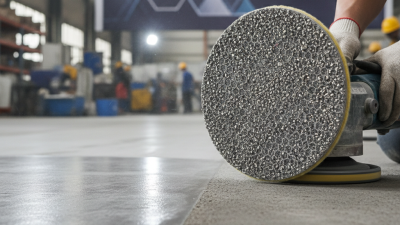
Resin polishing pads use diamond abrasives to refine concrete surfaces from 50 to 3,000 grit. Their performance depends on concrete hardness, moisture, machine pressure, and cutting speed. Low grits remove scratches, adhesive marks, and uneven patches. Medium grits reduce visible swirl marks and prepare the floor for refinement. High grits create a smoother, more reflective finish.

Do not rush. On a warehouse floor, a 50-grit pad may leave deep tracks if the operator presses too hard. I normally inspect the surface after each pass and remove dust before changing grits. A small test area reveals problems early. Skipping a grit can save time, but it may also preserve scratches that appear under strong lighting. That lesson is easy to learn the expensive way.

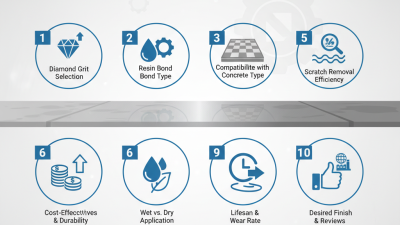
When comparing worldwide suppliers, request technical data for grit grading, pad thickness, bond hardness, and recommended machine speed. Reliable suppliers should explain wet or dry use clearly and provide consistent product samples. Pad life matters, but cutting stability matters more on large floors. Some suppliers advertise long service life without explaining concrete conditions. I have seen pads wear quickly on hard aggregate, even when the specification looked impressive. That mistake deserves review. Record floor hardness, water use, pressure, and coverage per pad. Concrete varies from one project to another. A supplier with practical testing guidance is usually more dependable than one offering only attractive prices.

Selection Criteria: 20–40 MPa Concrete, 3–5 in. Pads, and Diamond Density

Top 10 Concrete Polishing Resin Pads Suppliers Worldwide?

Choosing a resin pad supplier starts with the concrete, not the catalog. For floors measuring 20–40 MPa, ask for test results on a matching slab. Concrete at 20 MPa may cut quickly but release loose aggregate. Stronger 40 MPa surfaces usually need a more durable bond and steadier pressure. Small details matter.

Pad diameter also changes the working method. Three-inch pads suit edges, corners, and narrow rooms. Five-inch pads cover more area but may require stronger machines and better balance. Confirm the arbor system, backing thickness, and wet or dry compatibility before ordering. A sample set is worth the freight cost.

Diamond density needs careful checking. High density can improve scratch consistency on hard concrete, yet it may load with dust on softer floors. Lower density often cuts more freely, but wear can become uneven. I would request grit sizes, diamond concentration data, and a recommended machine speed. Ask for batch consistency, too. Labels are not enough.

I have seen contractors choose aggressive pads and blame the floor afterward. The real issue was excessive pressure. No supplier gets every variable right. Test three passes, inspect the scratch pattern, and record wear after each stage. A reliable supplier should discuss these imperfect results openly, not promise one pad for every slab.

Top 10 Concrete Polishing Resin Pad Suppliers Worldwide

Selection benchmark for 20–40 MPa concrete, 3–5 in. pads, and diamond density

The chart converts the practical selection envelope into three measurable criteria. Concrete compressive strength is shown in MPa, pad diameter in inches, and diamond density is represented as a three-level classification: 1 = low, 2 = medium, and 3 = high. These benchmarks are intended for comparing supplier specifications without displaying company or brand data.

Global Supplier Profiles: Top 10 Resin Pad Manufacturers by Product Range

The worldwide concrete polishing resin pad market is shaped by suppliers with broad, jobsite-focused product ranges. Grand View Research’s 2024 flooring analysis projects steady growth in concrete coatings, with demand supported by warehouses, retail spaces, and industrial refurbishments. The strongest ten supplier profiles generally cover 3-inch to 27-inch pads, grit levels from 16 to 3,000, and both wet and dry polishing systems.

Range matters more than a single impressive grit number. Leading manufacturers typically offer metal-bond transition tools, hybrid abrasives, resin pads, edge discs, and maintenance products. Some supply private-label programs and custom bond formulas for harder concrete. Others focus on fast-cut pads for soft, abrasive floors. Regional production is concentrated across North America, Europe, and Asia, while distribution networks increasingly support contractors in the Middle East and Latin America. MarketsandMarkets identifies construction renovation and industrial flooring as important demand drivers, although its figures combine several flooring technologies, not resin pads alone.

A practical supplier comparison should examine pad life, scratch consistency, backing strength, and technical testing. Ask for sample results on the actual slab. Marketing claims can look polished. Field performance is less predictable. A 2023 industry review by Research and Markets highlights sustainability and lower-maintenance flooring as continuing priorities. However, resin pads still vary sharply under moisture, aggregate exposure, and machine pressure. The best profile is not always the largest manufacturer; it is the supplier offering reliable documentation, responsive troubleshooting, and a range suited to real site conditions.

Technical Comparison: 500–2,000 ft² Pad Life, Bond Hardness, and Grit Stages

Choosing among the top concrete polishing resin pad suppliers worldwide requires more than comparing prices. Technical data matters. A reliable pad should disclose tested life, bond hardness, grit sequence, and concrete conditions.

In practical polishing work, pad life may range from 500 to 2,000 ft². Hard aggregate, heavy dust, and uneven floors can reduce that figure sharply. Soft-bond resins usually cut hard concrete more effectively. Hard-bond pads often last longer on softer concrete. The wrong bond can glaze quickly. That mistake is common.

A workable grit path may include 50, 100, 200, 400, 800, 1,500, and 3,000 grit. However, some floors need fewer stages. Supplier recommendations should match the earlier metal-tool finish. I have found that laboratory figures rarely match every site. That is worth questioning.

Tips: Test one small area before ordering large quantities. Record square footage, water use, machine speed, and visible scratches. Check the pad after each stage. If resin loading appears early, reduce pressure or change bond hardness. Ask suppliers for test conditions, not only advertised lifespan. A 2,000 ft² claim means little without concrete hardness, machine weight, and operator details. Photographing the floor after each grit stage also reveals defects that bright lighting can hide.

Purchasing Framework: ISO 9001, OEM MOQ, Lead Times, and Cost per ft²

When comparing the top ten concrete polishing resin pad suppliers worldwide, certification should be checked before price. ISO 9001 registration indicates controlled processes, but it does not guarantee consistent pad performance. Request the certificate number, production scope, and recent quality records. Ask how grit size, resin hardness, and segment bonding are inspected. A polished test area can reveal more than a sales sheet.

OEM MOQ often changes the real purchasing decision. A supplier may accept 100 pads for a standard design but require 1,000 pieces for custom color, label, or segment geometry. Confirm whether the MOQ applies per grit or per complete set. Request samples from the same production line. Small samples help, but they may hide batch variation. That risk deserves attention.

Lead times should include tooling, sampling, production, inspection, and export preparation. A practical estimate is 7–14 days for samples and 20–45 days for regular OEM production, depending on complexity. Calculate cost per ft², not only cost per pad. Include pad price, freight, tooling, replacement rate, labor, and expected coverage. For example, a 10-dollar pad covering 1,000 ft² costs one cent per ft² before labor. Actual coverage may fall on hard concrete or uneven floors. I would test at least three suppliers on the same slab, record water use and machine speed, then compare measured output rather than promised figures.

Top 10 Concrete Polishing Resin Pads Suppliers Worldwide? - Purchasing Framework: ISO 9001, OEM MOQ, Lead Times, and Cost per ft²
Rank Supplier Profile Primary Production Region Typical Product Range ISO 9001 Status OEM / Private-Label MOQ Typical Lead Time Indicative Unit Price Estimated Coverage per Pad Estimated Cost per ft² Best-Fit Buyer Purchasing Score
1 Large-scale diamond-tool manufacturer with automated resin-pad production East Asia 3–5 in. hand pads; 7–27 in. floor pads; hybrid and wet/dry resin systems; grit range 16–3,000 Usually certified; verify current certificate and scope 300–500 pieces per grit and size 15–25 days for standard items; 30–45 days for OEM items US$4.50–US$13.00 500–1,200 ft² US$0.004–US$0.026 Importers and high-volume distributors requiring competitive pricing ★★★★★
2 European professional-tool producer focused on premium floor-maintenance systems Western Europe Resin transition pads; edge pads; wet-polishing and dry-polishing systems; proprietary backing interfaces Commonly certified; request certificate number and audit date 500–1,000 pieces for private label; lower quantities for standard catalog items 20–35 days; 6–10 weeks when production is scheduled US$12.00–US$28.00 700–1,500 ft² US$0.008–US$0.040 Contractors prioritizing consistency, technical support, and long service life ★★★★★
3 North American diamond-abrasive supplier with domestic stock and custom-conversion capability North America Velcro-backed resin pads; burnishing pads; edge tools; custom labels and packaging Certification varies by facility; confirm manufacturing site 250–500 pieces per SKU for custom packaging 5–15 business days from stock; 25–40 days for custom orders US$8.00–US$20.00 600–1,300 ft² US$0.006–US$0.033 Regional distributors needing shorter replenishment cycles ★★★★☆
4 Mid-sized OEM factory producing private-label floor pads and compatible tooling East Asia Standard resin pads; turbo-segment pads; flexible edge pads; color-coded grit identification Often available; validate whether certification covers the actual factory 200–400 pieces per size and grit 18–30 days; 35–50 days for new molds or backing changes US$3.80–US$10.50 450–1,000 ft² US$0.004–US$0.023 New brands testing the market with moderate initial volumes ★★★★☆
5 South Asian abrasive producer serving construction-equipment distributors South Asia Wet-use resin pads; concrete honing pads; standard hook-and-loop backing; custom grit sequences May hold ISO 9001; obtain a current third-party certificate before approval 500–1,000 pieces per SKU 25–45 days; add 15–30 days for sea freight depending on destination US$3.50–US$9.00 400–900 ft² US$0.004–US$0.023 Price-sensitive buyers with established incoming-quality inspection ★★★★☆
6 Specialized European manufacturer of high-resilience polymer and diamond composites Central Europe Long-life dry resin pads; heat-resistant formulations; premium edge and detail pads Generally available; verify product traceability and quality scope 500–1,500 pieces for customized formulation or branding 30–50 days; samples commonly available in 7–14 days US$15.00–US$34.00 900–1,800 ft² US$0.008–US$0.038 Professional polishing contractors valuing fewer tool changes and long pad life ★★★★☆
7 Regional manufacturer supplying machine-compatible resin systems to private-label resellers Southeast Asia Floor-machine pads; resin and hybrid tools; standard hook-and-loop interfaces; OEM color systems Certification status must be checked for each production location 300–600 pieces per grit and diameter 20–35 days; 40–55 days for custom packaging US$4.20–US$11.50 500–1,100 ft² US$0.004–US$0.023 Distributors seeking a balance between price and regional logistics ★★★★☆
8 Small-batch technical converter offering custom dimensions and low-volume production North America Custom-shaped hand pads; specialty edge discs; low-volume private-label packaging Not always certified; use supplier audit and sample approval 50–150 pieces per SKU for selected standard constructions 10–20 business days for standard materials; 30–45 days for development work US$9.00–US$24.00 400–900 ft² US$0.010–US$0.060 Small brands, rental companies, and buyers requiring flexible customization ★★★☆☆
9 OEM-oriented tooling factory with broad export experience and container-load capacity East Asia Full grit progressions; wet and dry resin pads; metal-to-resin transition tools; printed cartons Frequently available; confirm certificate authenticity and factory address 500–1,000 pieces per SKU; lower MOQ may carry a setup charge 20–35 days for repeat orders; 45–60 days for new programs US$4.00–US$12.00 450–1,100 ft² US$0.004–US$0.027 Global wholesalers planning consolidated or full-container shipments ★★★☆☆
10 Local-market abrasive supplier with stocked generic pads and limited OEM services Multiple regional markets Common diameters and grits; basic wet/dry pads; replacement stock for popular machines May operate under a parent quality system; request facility-specific evidence 50–200 pieces for stock items; 500+ for private label 3–10 business days from inventory; 30–45 days for OEM orders US$6.00–US$16.00 350–850 ft² US$0.007–US$0.046 Maintenance contractors needing quick availability rather than maximum customization ★★★☆☆
Purchasing note: The prices and performance figures are indicative market ranges for comparable concrete polishing resin pads, not quotations from named companies. Actual cost per ft² depends on pad diameter, grit, concrete hardness, machine pressure, wet or dry operation, freight, import duties, packaging, and verified usable life. Before purchase, request an ISO 9001 certificate, technical data sheet, sample test report, OEM MOQ confirmation, production lead-time commitment, and a field trial on the target concrete.