Top Floor Polishing Pad Options for a Shine Like Never Before?
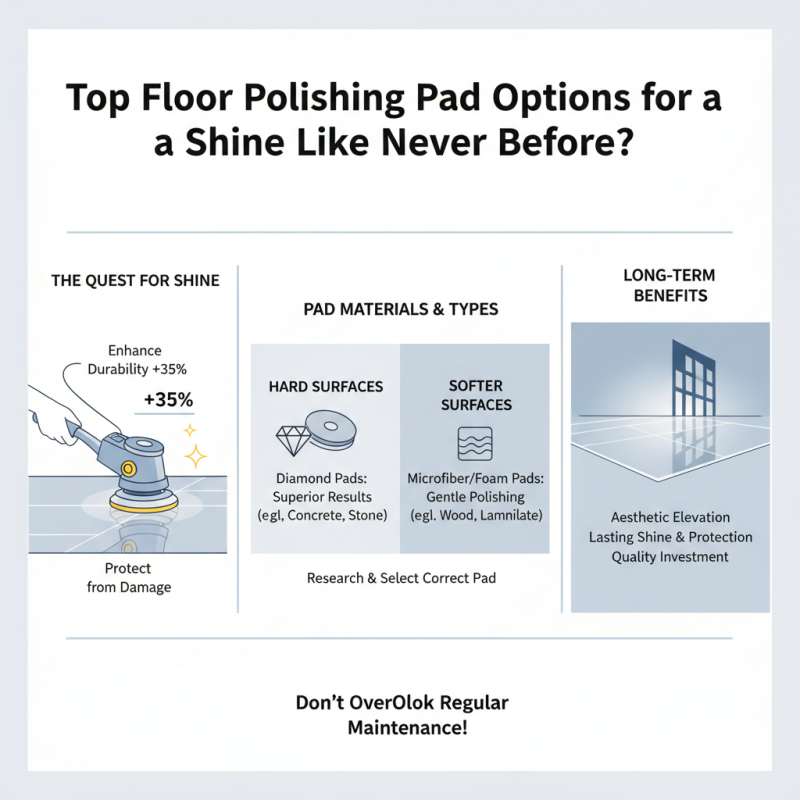
In the quest for exceptional floor maintenance, the choice of floor polishing pad plays a crucial role. Industry reports indicate that effective floor care can enhance durability by up to 35%. This is significant for commercial spaces, where foot traffic can rapidly wear down surfaces. The right polishing pad not only shines floors but also protects them from damage.
Understanding the various materials and styles of floor polishing pads is essential. Some options may claim higher performance, while others might lead to uneven finishes. It’s important to research and select pads that suit specific flooring types and conditions. For instance, diamond pads offer superior results on hard surfaces but may not be ideal for softer materials.
Many users overlook the importance of regular maintenance. A polished floor can elevate the aesthetic of any space, but improper pad selection can lead to disappointing results. Therefore, it’s worth considering the potential long-term benefits of investing in quality floor polishing pads that ensure a lasting shine and protection for your floors.
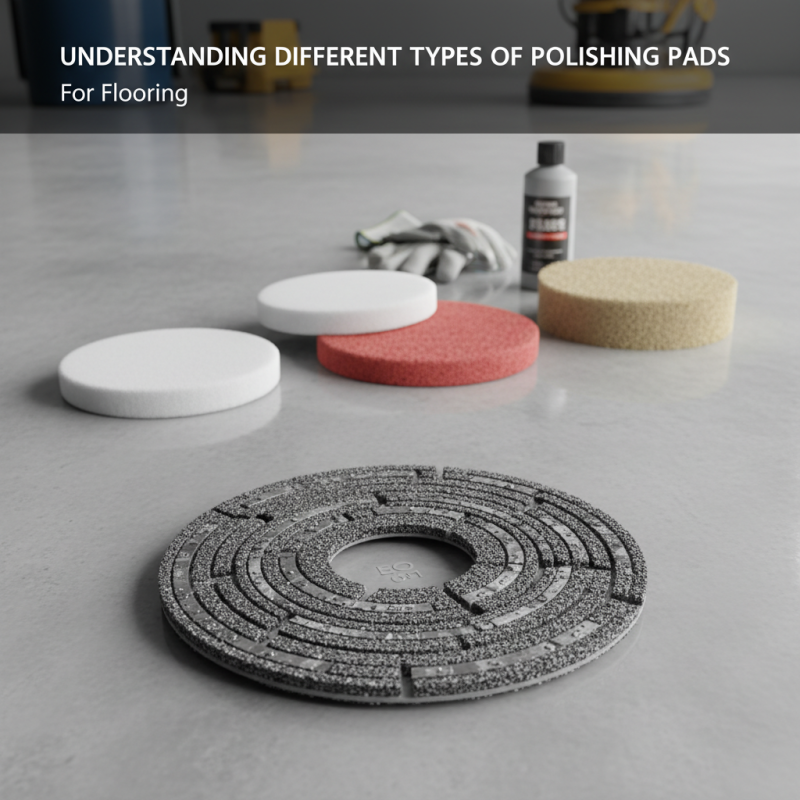
Understanding Different Types of Polishing Pads for Flooring
When it comes to achieving a brilliant shine on flooring, understanding the types of polishing pads is essential. Each pad has a unique purpose, affecting the final result. For instance, diamond pads are popular for concrete and terrazzo floors due to their durability and aggressive grinding capabilities. According to industry reports, using the right diamond grit can improve polishing efficiency by up to 30%.
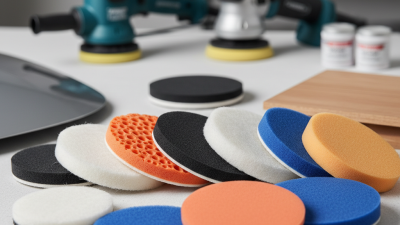
Foam or buffing pads are great for finishing work. They can enhance the gloss level significantly, creating a mirror-like finish. Surveys indicate that users often see a 50% increase in shine when switching from standard pads to higher-grade buffing options. It's crucial, however, to choose the right pad for your specific flooring type to avoid scratching or dulling the surface.
Tips: Always test a small area first. Monitor wear on your pads regularly; worn pads can lead to uneven results. It's also worthwhile to change pads frequently during the process for optimal shine and reduced labor time. Don't hesitate to mix and match pads for varying finishes.
Key Features to Look for in High-Quality Polishing Pads
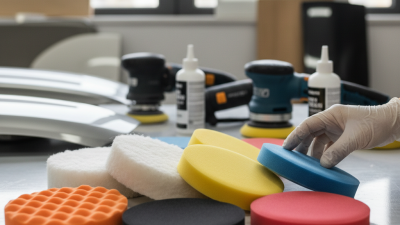
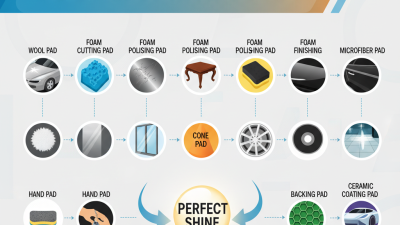
When choosing polishing pads, the material is critical. High-quality options often use foam, wool, or microfiber. Each type offers distinct benefits in terms of durability and finish. For example, foam pads can be great for applying polish evenly. Wool pads, on the other hand, may excel at cutting through tough surfaces. Understanding these materials helps select the best one for your needs.
The density of the pad also plays a vital role. A denser pad can create more pressure and offer a deeper shine. However, this may not always be ideal for softer surfaces. Additionally, consider the pad's size. Larger pads cover more area but can be harder to maneuver in tight spaces. Make sure to match the pad size with your machine for efficient polishing. Lastly, always think about the pad's lifespan. Some may wear out quickly, requiring more frequent replacements. This can lead to additional costs and waste.
Step-by-Step Guide to Selecting the Right Polishing Pad
Choosing the right polishing pad can seem daunting. Many professionals recommend assessing the material and size before making a decision. Polishing pads come in various materials, such as foam, wool, and microfiber. Each offers unique benefits for different surfaces. For example, foam is often preferred for finishes that require fine polishing. Meanwhile, wool is better suited for heavier cutting tasks.
A recent study by the International Floor Care Association noted that 70% of cleaning professionals see improved results with the correct pad selection. Selecting the right grit is also critical. Lower grit pads are more aggressive and ideal for heavy scuffs. Higher grit pads provide a finer finish, ideal for maintenance. Understanding these nuances can significantly impact the final sheen of your floor.
Reflecting on personal experiences, it’s clear that trial and error play a substantial role. Many may find their first choice isn't always the best. The right pad isn’t just about the product; it’s about how it interacts with your specific conditions. Constantly refining your selection process is key to achieving that unparalleled shine.
Top Floor Polishing Pad Options for a Shine Like Never Before
| Pad Type |
Material |
Grit Size |
Best Use |
Durability |
| Foam Pad |
Polyurethane |
Medium (400-600) |
Light Scratching |
High |
| Diamond Pad |
Synthetic Diamond |
Fine (800-3000) |
Polishing |
Very High |
| Mesh Pad |
Nylon |
Coarse (100-200) |
Heavy Scratching |
Medium |
| Microfiber Pad |
Microfiber |
Fine (300-800) |
Waxing and Polishing |
High |
| Buffing Pad |
Wool / Synthetic |
Medium (600-1200) |
Final Finishing |
Medium |
Top Brands and Products for Exceptional Floor Shine
When it comes to achieving an unparalleled shine for your floors, the right polishing pads are essential. Recent industry reports indicate that using high-quality pads can enhance the gloss level by up to 50%. For professionals and DIY enthusiasts alike, selecting the ideal pad can significantly affect the final result. A thorough understanding of material types is crucial. Synthetic pads often outperform natural ones in durability and effectiveness.
Many industry experts emphasize the importance of pad grit. A finer grit can create a mirror-like shine, while coarser grits are better for removing imperfections. Research shows that pads with a specific blend of materials can lead to a clearer finish. Additionally, proper maintenance of polishing equipment often goes overlooked. Regular inspection and cleaning can prolong the life of your pads and maintain consistent performance.
While high-tech pads promise exceptional results, they may not always deliver. Users sometimes report uneven finishes, which can stem from improper techniques or machine settings. It’s important to approach floor polishing with an emphasis on technique. The right approach can mitigate the risks of poor results. Understanding these nuances can help users make informed choices, ensuring an impressive shine that highlights the beauty of any floor.
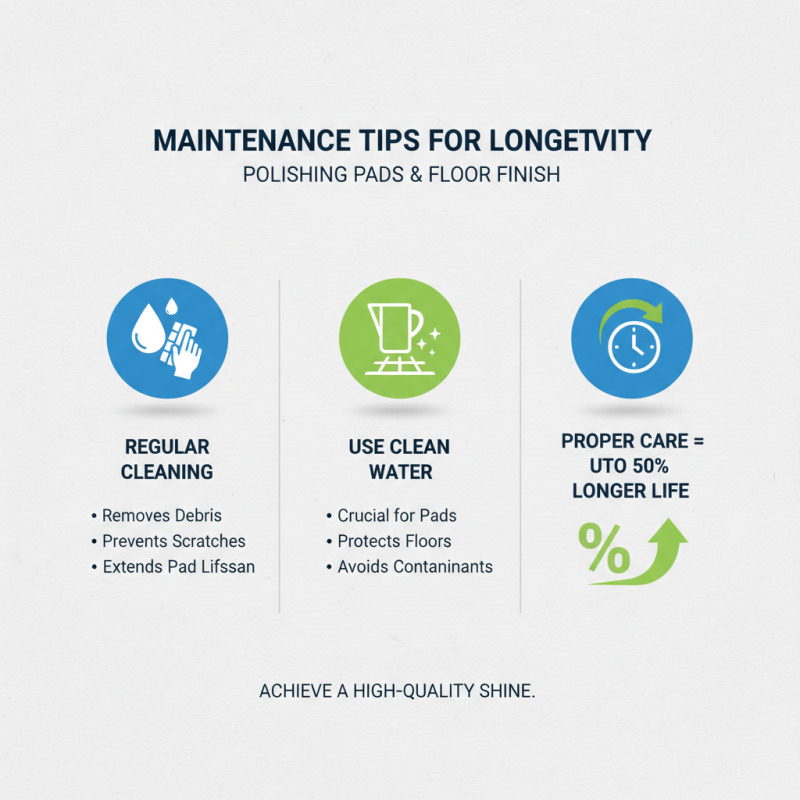
Maintenance Tips for Longevity of Polishing Pads and Floor Finish
Maintaining the longevity of polishing pads and floor finishes is essential for achieving a high-quality shine. Research indicates that proper care can extend the lifespan of these pads by up to 50%. Regular cleaning, for instance, helps remove debris that can lead to scratches. Using clean water is crucial, as contaminated water can damage both pads and floors.
Avoiding excessive pressure during polishing is vital. Overloading pads can result in faster wear and reduced effectiveness. A 2023 study highlighted that operators who adjusted their pressure settings saw a 30% improvement in pad life. Additionally, storing pads in a dry, cool area enhances their durability. Pads left in humid conditions are more prone to degradation.
Periodic inspections are also important. Inspect pads for signs of wear, such as fraying or discoloration. This proactive approach helps identify when to replace pads before they cause damage to the floor finish. Keeping a log of use can also provide insights into wear patterns, ensuring informed decisions for future maintenance.