Why Are Polishing Pads Essential for Achieving a Flawless Finish?
Polishing pads play a crucial role in achieving a flawless finish across various industries, including automotive and woodworking. According to a recent industry report by the International Polishing Association, the right polishing pad can increase efficiency by up to 30%. This statistic emphasizes the importance of selecting appropriate materials for specific tasks.
Expert Tom Henderson, a renowned figure in polishing technology, states, "The right polishing pads make all the difference in the final appearance of a surface." His insight highlights the necessity of choosing quality pads to avoid imperfections. Many professionals overlook the impact of polishing pads, leading to diminished results.
Moreover, not all pads perform equally well. Variations in composition and density often lead to inconsistencies in finishes. In some cases, a poorly selected pad can cause swirl marks or uneven surfaces. Awareness of these factors is essential for achieving desirable results. Reflecting on these challenges, it becomes evident that selecting the right polishing pads is not merely a preference but a necessity for success.
Importance of Polishing Pads in Surface Finishing Processes
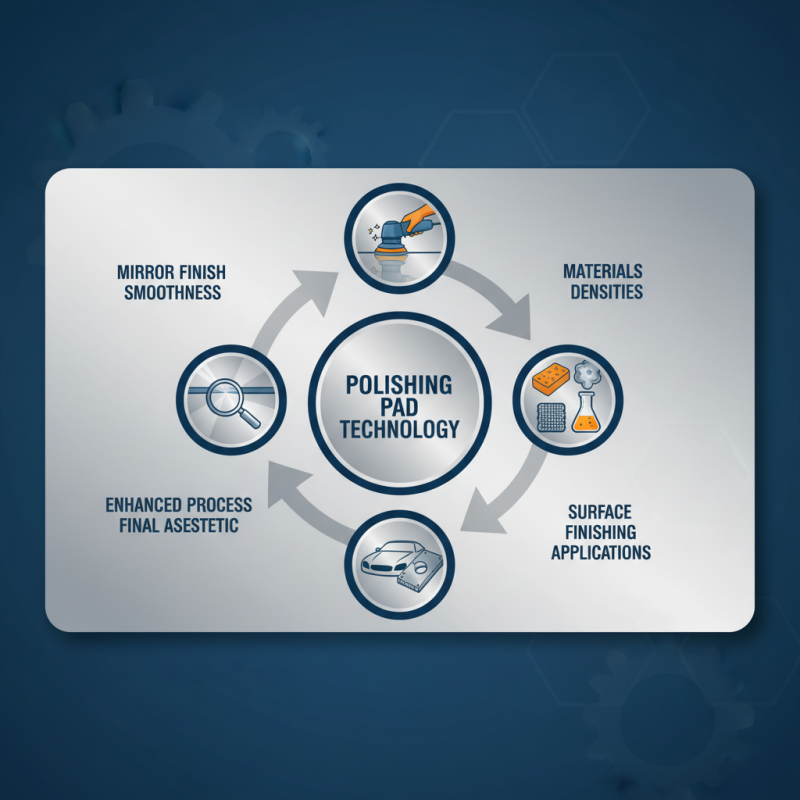
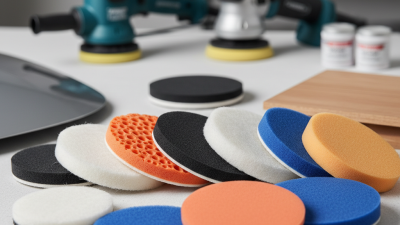
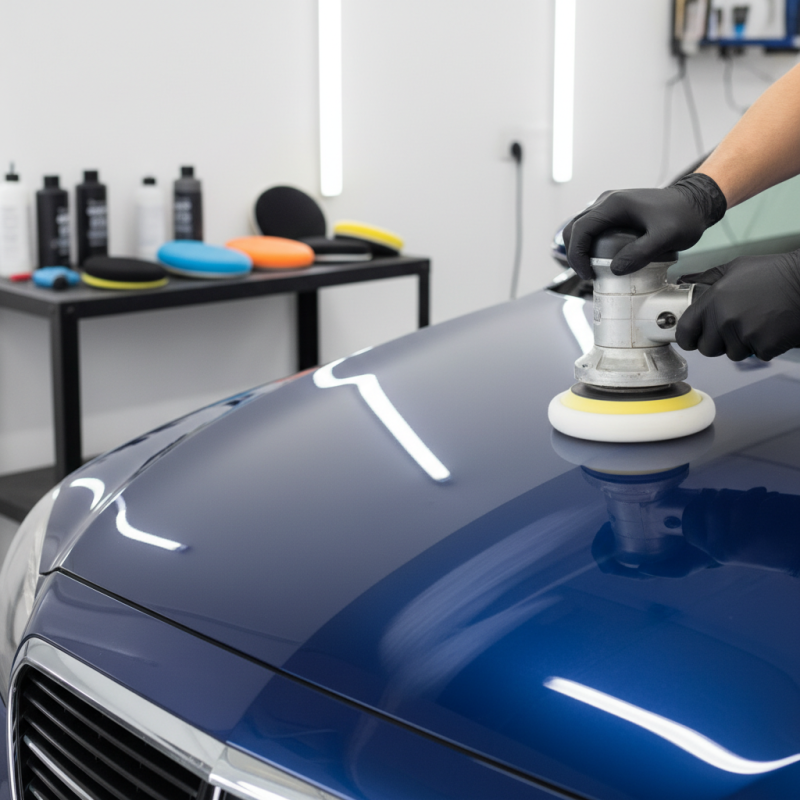
Polishing pads play a critical role in achieving a smooth, mirror-like finish. These tools are essential in various surface finishing processes. They come in different materials and densities, tailored for specific applications. The right pad can significantly enhance the polishing process, influencing the final look of the surface.
Using the wrong type of pad can lead to inconsistencies. For example, a softer pad might not remove scratches effectively. Conversely, a harder pad may leave swirl marks. It's important to choose wisely based on the project's needs. Knowledge of pad materials can prevent errors that can ruin an otherwise perfect finish. Proper technique also matters. Applying too much pressure can cause premature wear on the pads.
Experience plays a role here. Beginners often overlook how different pads impact results. Over time, individuals learn the nuances of pad selection. Sometimes, the results are not what was expected. Reflecting on these experiences can lead to improvements in future projects. Understanding how polishing pads interact with the surface is key to mastering the finishing process.
Types of Polishing Pads and Their Specific Applications in Industry
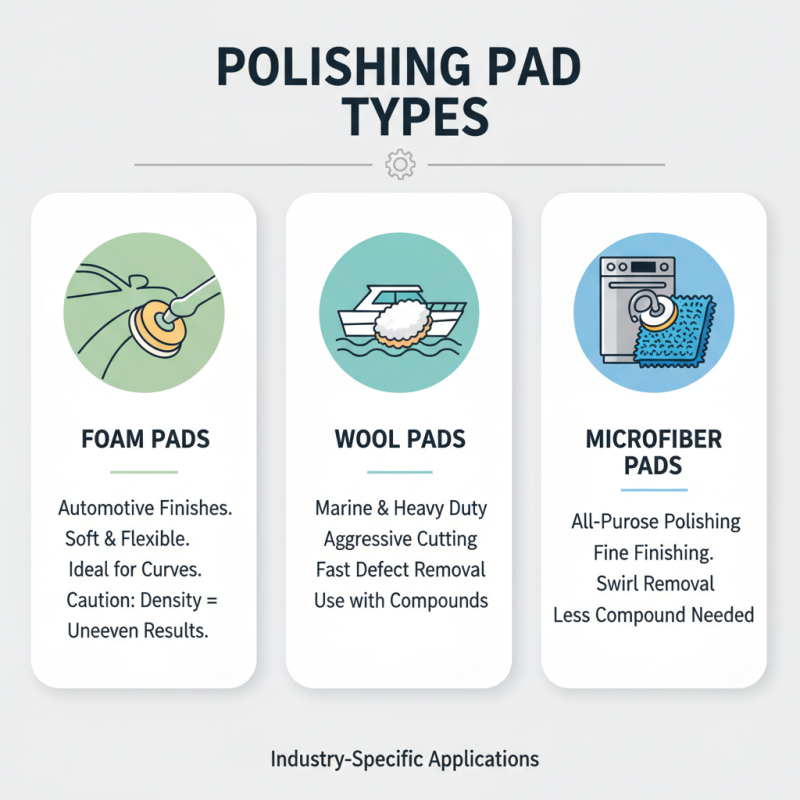
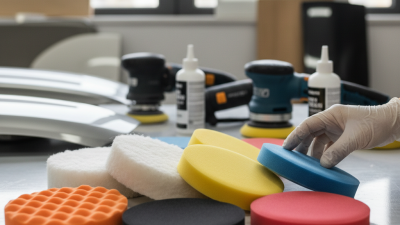
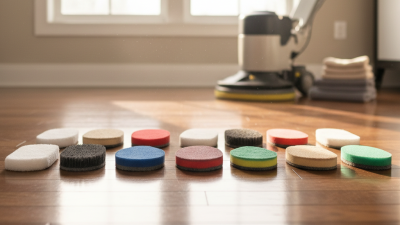
Polishing pads come in various types, each suited for specific tasks in different industries. Foam pads are commonly used for automotive finishes. They are soft and flexible, making them ideal for polishing curves and contours. However, their density can sometimes lead to uneven results if not used carefully.
Wool pads are another popular choice, particularly in woodworking and metal finishing. They are more aggressive than foam pads. This makes them effective for removing scratches and imperfections. Yet, they can leave behind swirl marks if overused. Users need to balance aggression and finesse.
Felt pads are often used in stone and concrete applications. They provide a high-gloss finish, but achieving that gloss requires patience. Over-polishing can create heat, which might damage the surface. It’s essential to apply the right pressure and speed for optimal results. Each pad type has its purpose, yet they all require skill and practice to master.
Industry Standards and Data on Surface Finish Quality Achieved with Polishing Pads
Achieving a flawless finish relies heavily on polishing pads. Industry studies show that using the right pads can enhance surface quality significantly. According to research by the Surface Engineering Association, 85% of manufacturers report improved finish quality when polishing pads were used in their processes.
Polishing pads are instrumental in removing surface imperfections. Data indicates that surfaces treated with high-quality pads can achieve a roughness average (Ra) of less than 0.1 micrometers. In contrast, untreated surfaces often exhibit higher roughness values, underlining the necessity of proper polishing techniques.
However, not all polishing pads perform equally. One study highlighted that over 30% of operators experienced inconsistent results due to improper pad selection. This inconsistency can lead to surface defects, which detracts from the overall product quality. Manufacturers must continuously evaluate pad performance to meet industry standards effectively.
Surface Finish Quality Achieved with Polishing Pads
Comparative Analysis of Polishing Pad Materials and Their Effectiveness
Polishing pads play a critical role in achieving that perfect finish on various surfaces. The effectiveness of these pads often depends on their material. For example, foam pads are known for their versatility. They can handle different compounds efficiently. In contrast, wool pads provide a more aggressive cut. This makes them suitable for heavier defect removal.
According to data from industry reports, using the right polishing pad can enhance efficiency by up to 30%. Additionally, surface preparation has a significant impact. The wrong pad can lead to swirl marks or holograms. These often require extra polishing to correct. The choice of material should align with the task at hand.
Tip: Always test different pads on a small area first. This helps gauge how they perform with your specific products. You can avoid costly mistakes this way.
Another aspect to consider is pad maintenance. Dirty or damaged pads can reduce effectiveness dramatically. According to experts, cleaning pads after each use can extend their lifespan. This is often overlooked, but it can save on costs in the long run.
Tip: Keep a brush handy. A quick cleaning after each session can keep pads performing at their best. This small effort can lead to big differences in finish quality.
Best Practices for Selecting and Using Polishing Pads for Optimal Results
Selecting the right polishing pads is crucial for a flawless finish. The material and grit of the pad can greatly impact the final result. Industry studies show that using the wrong pad can cause marring or reduce shine by up to 40%. This highlights the importance of compatibility between the pad and the polish used.
When choosing polishing pads, consider the type of surface you’re working on. For soft paints, softer pads are ideal, while harder surfaces require more aggressive pads. A common mistake is assuming all pads perform the same way across different applications. Testing various pads on scrap material can help identify the best match for your specific project.
Tips: Always clean your pads after use. This simple practice prevents cross-contamination of substances that can diminish results. Also, avoid using excessively worn pads. A worn pad may not provide the desired finish and can lead to frustration.
Proper technique is equally vital. Applying too much pressure can cause damage. It’s best to let the polishing pad do the work. Many individuals overlook the importance of speed and consistency in their movements. A steady hand yields much better results, reducing the risk of uneven finishing.
Why Are Polishing Pads Essential for Achieving a Flawless Finish?
| Pad Type |
Material |
Usage |
Best For |
Finishing Level |
| Foam Pad |
Polyurethane |
Cutting / Polishing |
Clear Coat |
Medium to High Gloss |
| Wool Pad |
Natural Wool / Blended Wool |
Aggressive Cutting |
Heavy Defects |
High Gloss |
| Microfiber Pad |
Microfiber |
Finishing / Polishing |
Light Defects |
High Gloss / Luster |
| Sponge Pad |
Polyurethane / Foam |
Polishing |
General Surface |
Medium Finish |