2026 How to Choose the Right Polishing Pads for Your Needs?
Choosing the right polishing pads can significantly impact your finishing results. In the automotive and woodworking industries, polishing pads are essential tools. According to a recent market analysis, the global demand for polishing pads is expected to grow by 5% annually. This emphasizes their importance across various sectors.
Selecting the appropriate polishing pads is not always straightforward. There are numerous types available, each designed for specific applications. A recent survey indicated that 70% of professionals experience challenges in selecting the correct pad. Factors such as pad material, density, and size must be considered carefully.
When polishes do not meet expectations, it often stems from using incompatible pads. Industry experts recommend testing different options to find the best fit. Engaging in this process can lead to improved outcomes and more efficient workflows. Ultimately, the right polishing pads will enhance your craftsmanship and elevate the quality of your work.
Understanding Different Types of Polishing Pads: An Overview
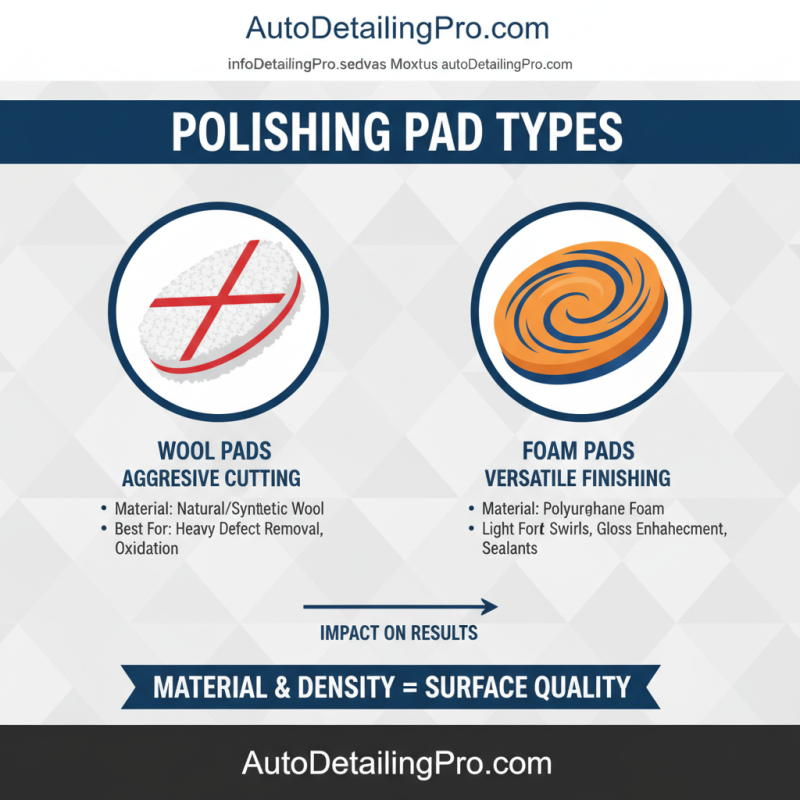
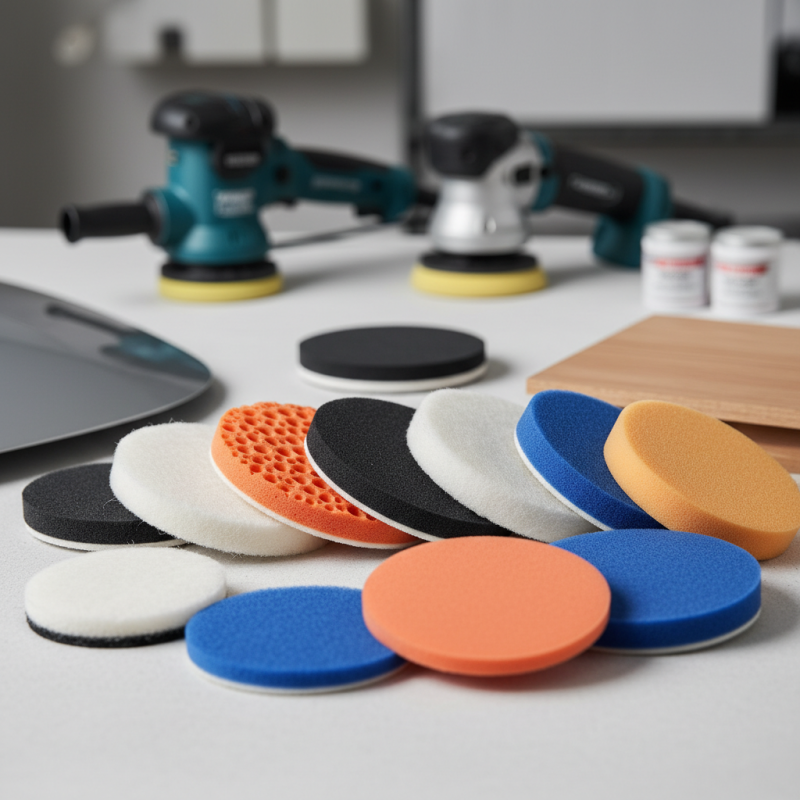
When selecting polishing pads, understanding their types is crucial. Polishing pads come in various materials and densities, each designed for specific applications. For example, wool pads are aggressive and best for heavy cutting. Foam pads are versatile and effective for finishing. The material choice significantly impacts the polishing results and the surface quality.
A report from the American Coatings Association suggests that improper pad selection can lead to increased time and labor costs. An estimated 30% of professionals admit that they have used the wrong pads due to a lack of knowledge. This highlights the necessity for education in tool selection.
Tips: Always test the pad on a small area first. This helps in assessing compatibility with your surface. Consider the thickness of the pad; thicker ones often reduce the risk of damaging delicate surfaces. Remember to adjust your technique based on the pad material. Wool pads may require more pressure, while foam pads work well with lighter touch. Reflecting on your past experiences can guide better choices in the future.
Key Factors to Consider When Choosing Polishing Pads
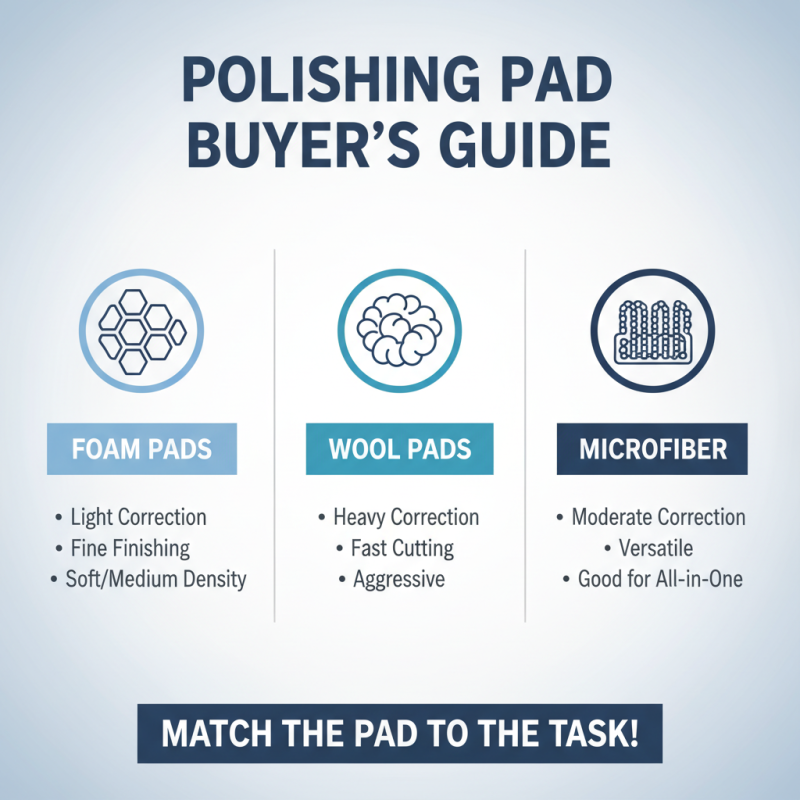
When choosing polishing pads, several factors should be considered. The material of the pad plays a crucial role. Foam, wool, and microfiber are common options. Each type offers different levels of cut, finish, and durability. Foam pads can be great for light polishing, while wool pads might be necessary for heavy correction. It’s essential to match the pad type with the task at hand.
The size of the pad is another important detail. Smaller pads can fit into tight spaces but may require more passes. Larger pads cover more area quickly, but they might miss spots. Consider the size of your polishing machine as well. Selecting the right size ensures better control and effectiveness.
Lastly, think about the task you’re aiming for. Achieving a high-gloss finish might need a softer pad. Yet, for deeper scratches, a firmer pad might be essential. Sometimes, it helps to try different combinations. It’s a process of learning what works best. Don't hesitate to experiment to find your optimal setup.
Material Composition: Impact on Performance and Longevity
Selecting the right polishing pads involves more than just personal preference. The material composition plays a critical role in both performance and longevity. For instance, foam pads are popular due to their versatility. They are ideal for finishing tasks. However, foam’s lifespan can be shortened if used improperly. According to industry data, foam pads typically last around 20-30 hours of use before showing signs of wear.
On the other hand, microfiber pads offer a different advantage. Their structure allows for better heat dissipation, making them suitable for extended polishing sessions. Reports from material science studies indicate that microfiber pads can last up to 50% longer than foam pads when used in similar conditions. This longevity is crucial for professionals who rely on consistent performance. However, microfiber can be less forgiving on softer surfaces, which might lead to some imperfections in the polishing process.
Experimentation with different materials is essential. Users often face challenges finding a balance. A pad that excels in smoothness may lack durability. Detailed analysis shows that blending materials can sometimes yield better results, yet this often deviates from standard options. Choosing the right polishing pad is not straightforward. It requires understanding the nuances of each material’s strengths and weaknesses.
Matching Polishing Pads to Specific Applications and Surfaces
Choosing the right polishing pads requires understanding their applications and surfaces. Polishing pads come in various materials, each suited for different tasks. For instance, foam pads are excellent for finishing, while wool pads offer aggressive cutting. According to industry reports, 40% of professionals struggle with selecting the appropriate pad, leading to less than optimal results.
Surface type significantly impacts pad choice. Soft surfaces, like paint, need softer pads to prevent damage. Hard surfaces, such as metal, may require more aggressive pads. Research indicates that pads matching surface hardness can improve efficiency by up to 30%. However, many overlook the importance of this alignment, often resulting in swirling or uneven finishes.
Application also plays a crucial role. For delicate tasks, a more gentle touch is vital. Overlooking this can lead to accidents or poor finishes. Polishing pads can wear out quickly if used improperly. Gathering feedback from users suggests that around 25% of users do not replace worn pads regularly. This oversight can lead to diminished results and increase project time. Understanding these nuances can improve not just the quality but also the overall experience in polishing projects.
Performance Metrics: How to Evaluate Polishing Pad Efficiency
Choosing the right polishing pads can significantly influence the outcome of your project. To evaluate their efficiency, start by examining the material composition. Different materials offer varied cut rates and finishes. Foam pads are soft and ideal for fine polishing. Wool pads provide aggressive cutting but can leave swirls if not handled correctly.
Next, consider the pad density. High-density pads work well for heavy cutting but may not provide the finesse required for delicate finishes. On the other hand, low-density pads are great for gentle polishing. However, they might wear out quickly under heavy use. It's a balancing act between achieving a desirable finish and ensuring longevity.
Performance metrics such as cut rate and finish quality should guide your choice. Some pads excel in cutting speed but may sacrifice surface clarity. You might find a pad that leaves a perfect finish but takes longer. Each choice has its drawbacks. Testing different pads might lead to unexpected results. Improvement comes through experience and experimentation. Pay attention to how each pad interacts with your surface.