What Are the Best Metal Abrasives for Your Project?
When it comes to selecting the right Metal Abrasives for your project, the choices can be overwhelming. As John Smith, a leading expert in the Metal Abrasives industry, emphasizes, “Choosing the right abrasive can make or break your project.” This statement rings true for many professionals who must navigate through a myriad of options tailored for specific applications.
Metal Abrasives serve various purposes, from surface preparation to finishing touches. Each type, whether it's garnet, aluminum oxide, or steel shot, comes with its own set of characteristics. Understanding these differences is crucial. Yet, many overlook certain aspects of their project, leading to less than ideal outcomes. Choosing an abrasive isn't just about the type; it involves considering the project's demands.
Abrasives may wear out faster than expected. This phenomenon could stem from improper selection or inadequate usage. Reflecting on past projects reveals missteps that could have been avoided. It’s a reminder that even experts must remain vigilant about their choices. Investing time in understanding Metal Abrasives can lead to better results and higher satisfaction in the long run.
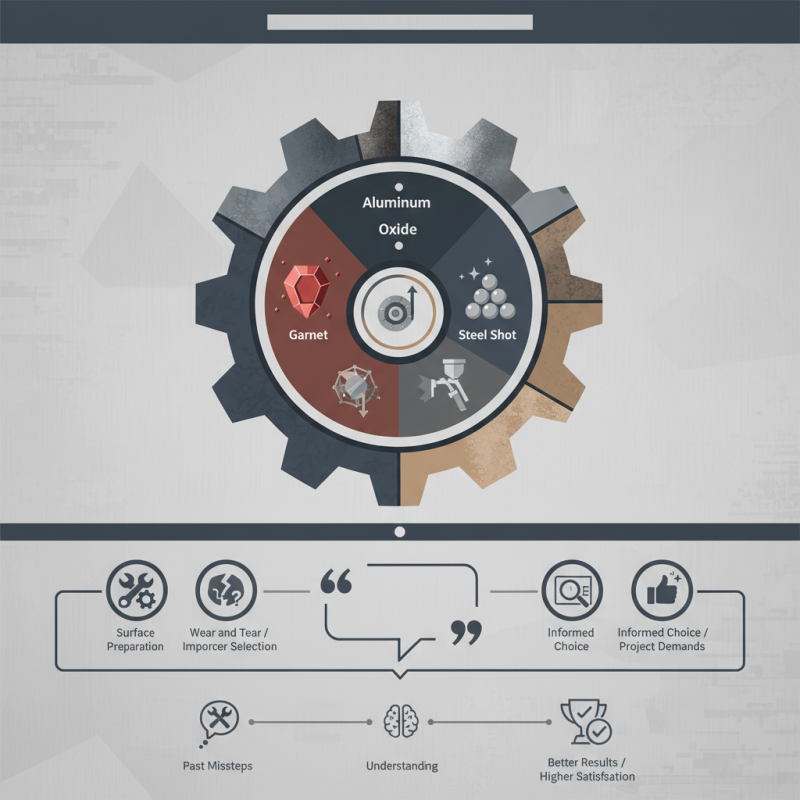
Types of Metal Abrasives: An Overview of Common Materials
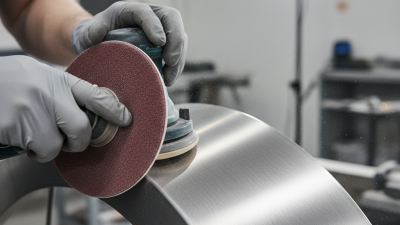
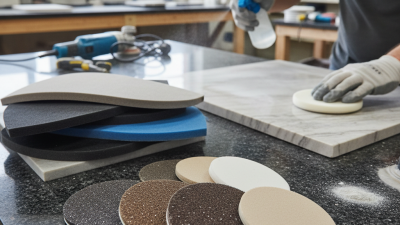
When it comes to metal abrasives, different materials offer unique benefits for specific projects. Common types include aluminum oxide, silicon carbide, and garnet. Each of these has distinct properties that make them suitable for various applications in sanding, grinding, and polishing.
Aluminum oxide is popular for its durability and effectiveness on harder metals. It can withstand high pressures and is often seen in industrial settings. Silicon carbide, on the other hand, excels in softer materials like aluminum and brass. It's known for its sharpness and ability to produce a smooth finish. Garnet abrasives are softer and typically used for finer finishes, making them ideal for wood and metal crafts.
**Tips:** Choose the abrasive based on your project material. If you're unsure, get a variety pack. Experimentation can yield surprising results. Keep in mind that overuse of abrasives can lead to unnecessary wear—both of the tool and the material. Make sure to assess your project needs precisely.
Factors Influencing Abrasive Performance in Metalworking Projects
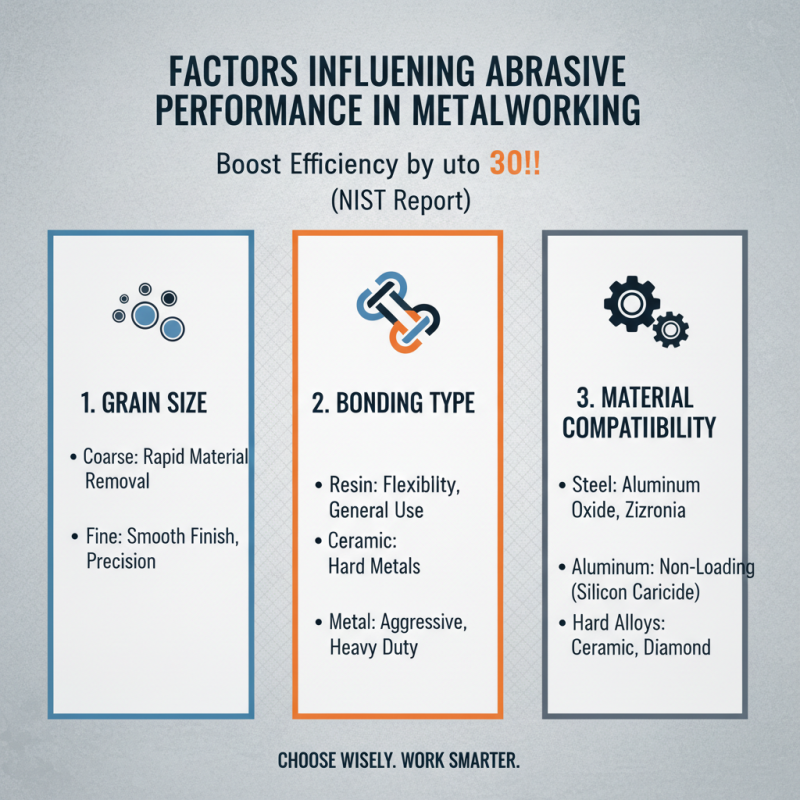
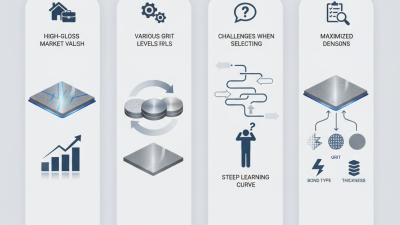
Choosing the right metal abrasives can significantly impact your project's success. Several factors influence abrasive performance, such as grain size, bonding type, and material compatibility. According to a report by the National Institute of Standards and Technology, selecting abrasives based on these factors can enhance efficiency by up to 30%.
One key point is grain size. Fine grains provide a smooth finish but may clog easily. Coarse grains remove material quickly but can leave rough surfaces. Understanding your desired finish is crucial. Also, consider the bonding type. Some abrasives bond well with metal, while others are more suited for wood or plastic. Experimenting might be necessary to find the best match.
Tips: Test different abrasives on scrap materials. This will help you gauge their performance without risking your main project. Always pay attention to the dust generated. A poorly chosen abrasive can create excessive debris, affecting visibility and safety. Align your abrasive choices with the material you're working on for better results. Balancing speed and quality often requires adjusting your approach. Stay flexible in your choices, as the perfect abrasive may not always be evident at first.
Comparative Analysis of Steel, Aluminum, and Ceramic Abrasives
When selecting metal abrasives, understanding the differences between steel, aluminum, and ceramic options is crucial for your project.
Steel abrasives are durable and effective for heavy-duty tasks. They excel in removing rust and paint. However, they may cause excessive wear on softer materials.
Aluminum abrasives are lighter and less aggressive. They work well for finishing tasks and polishing surfaces. This makes them ideal for delicate applications.
On the downside, they wear out faster than steel abrasives. They might not handle coarse work effectively.
Ceramic abrasives provide a unique blend of durability and cutting performance. They retain their sharpness longer, which can lead to reduced downtime.
However, they might be more expensive. Be mindful of the working conditions. Take care that the heat generated doesn’t damage your materials.
Tips: Always choose abrasives based on the specific needs of your project. Consider the material and the finish required.
Test small samples when trying a new abrasive. This helps avoid costly mistakes. When working with softer metals, try aluminum as a lighter option.
Choosing the Right Grit Size for Optimal Metal Surface Finishing
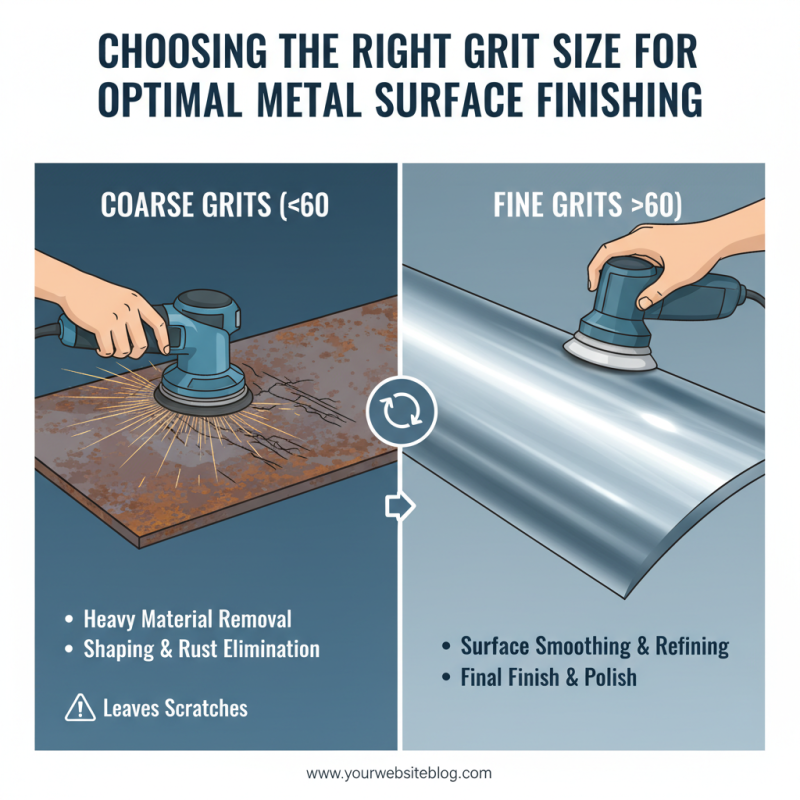
When it comes to metal surface finishing, grit size plays a crucial role. Selecting the right grit can greatly impact the final outcome of your project. Coarse grits, typically under 60, are ideal for heavy material removal. They work well to shape metal or eliminate rust. However, they can leave scratches that may require further smoothing.
Medium grits, like those in the range of 80 to 120, strike a balance. They remove material while providing a finer finish. These grits are suitable for most metalworking tasks. They help prepare surfaces for coatings or paints. On the other hand, fine grits, typically above 150, are perfect for achieving a smooth surface. They are often used in the final stages of metal finishing.
Choosing grit size often involves trial and error. Sometimes, the results aren't as expected. A too-fine grit on rough metal may prolong the process without significant improvement. Reflecting on this, it's clear that understanding the desired finish is crucial. Factors like material type and intended use should influence your choice. This personalized approach can prevent unnecessary adjustments and enhance project efficiency.
Industry Standards and Safety Considerations for Metal Abrasives
When working with metal abrasives, safety cannot be overlooked. The use of abrasives can pose health risks. For instance, a report by the American Conference of Governmental Industrial Hygienists highlights that inhalation of abrasive dust can lead to respiratory issues. It's crucial to wear appropriate PPE, including masks and gloves. Consistent monitoring of air quality is also necessary.
Industry standards dictate the levels of exposure to harmful materials. The Occupational Safety and Health Administration (OSHA) has established permissible exposure limits (PELs) for various abrasive materials. Workers should regularly check these standards. Equipment must be updated to ensure safe use. It's vital to provide training on hazards associated with different metal abrasives.
Moreover, the effectiveness of metal abrasives is influenced by their characteristics. Some abrasives may cause excessive dust. Others may not achieve desired surface finishes. Recognizing these aspects can minimize potential accidents and ensure workers’ safety. Neglecting safety measures can lead to severe injuries and lawsuits. Reflection on past incidents can enhance future practices.
What Are the Best Metal Abrasives for Your Project? - Industry Standards and Safety Considerations for Metal Abrasives
| Abrasive Type |
Applications |
Material |
Safety Considerations |
Recommended Grit Size |
| Aluminum Oxide |
Metal polishing, grinding |
Alumina |
Use appropriate PPE; avoid inhalation |
36-120 |
| Silicon Carbide |
Hard metals, glass, ceramics |
Silicon hexacarbonide |
High dust levels; respiratory protection required |
40-240 |
| Ceramic Abrasives |
Heavy grinding, welding seams |
Ceramic grains |
High temperature; ensure ventilation |
24-100 |
| Zirconia Alumina |
Heavy-duty grinding, metal fabrication |
Zirconia/Alumina blend |
Requires eye and respiratory protection |
24-120 |